Déjate seducir por el mundo del vino
Déjate seducir por el mundo del vino
21 junio, 2026
Colin Harkness
As with so many Spanish bodegas, wine production at what was eventually to become Bodegas Binifadet, started in the home – in this case, of the Anglés family. They can trace their lineage back for hundreds of years and no doubt throughout the centuries, wine was one of the products that sustained the family.
However, it was the father of the current owner and Head Winemaker, who decided eventually to act upon the numerous positive comments made by the family and their friends about the quality of the wine that Señor Aglés was making, and try his hand at commercialising his hobby. At this time, towards the end of the last millennia and the start of the noughties, they weren’t the only ones thinking the same thing.
Two other bodegas, Menorquinas Crispin Mariano and Hort de Sant Patrici were also making Menorcan wines. However, rather than go into direct competition with each other, this triumvirate decided that the best way forward was to apply for official demarcation – not an easy thing! These determined men realised that they needed first to work together to create a Menorcan wine identity and push on from there. Petitions to the Ministry of Agriculture of the national Government, appeals and a very strong case were, after a lengthy paper chase, finally approved.
In 2003 Vino de la Tierra (VdlT), or Indicación Geográfica Protegida (IGP) Illa de Menorca, was created, with Señor Anglés, of course, one of its founders.
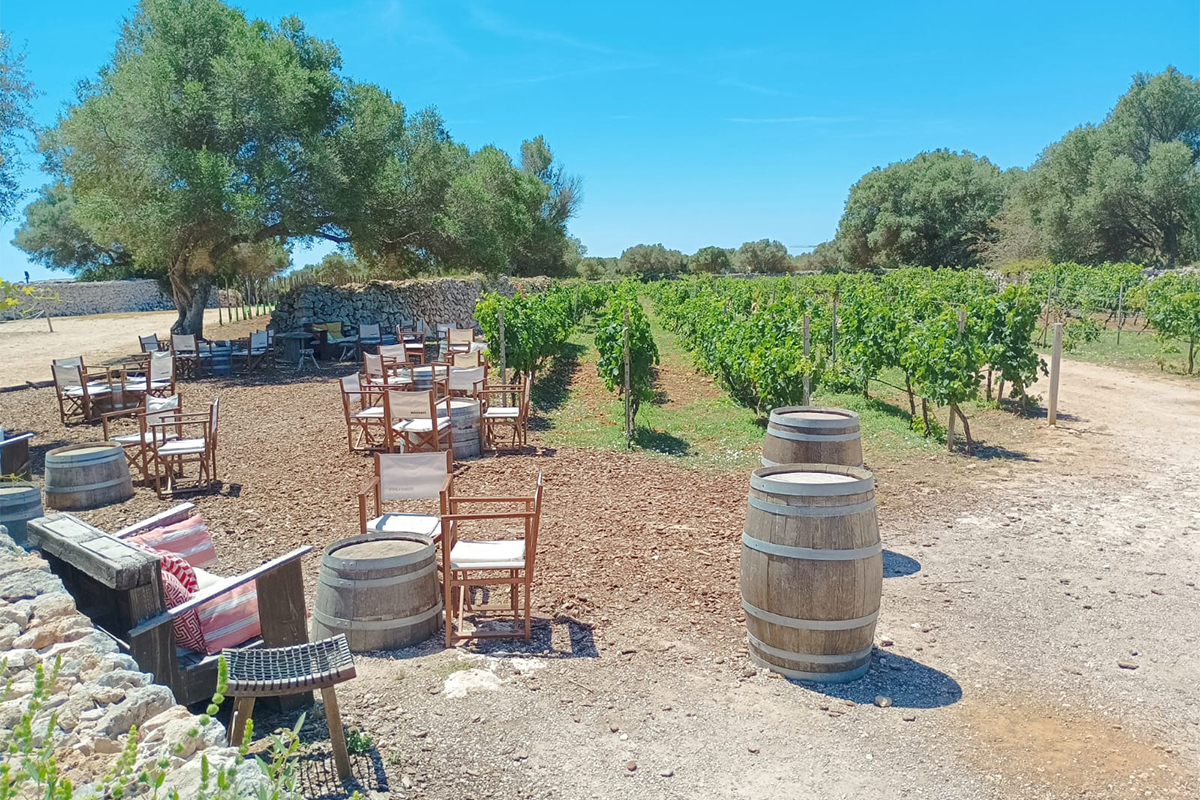
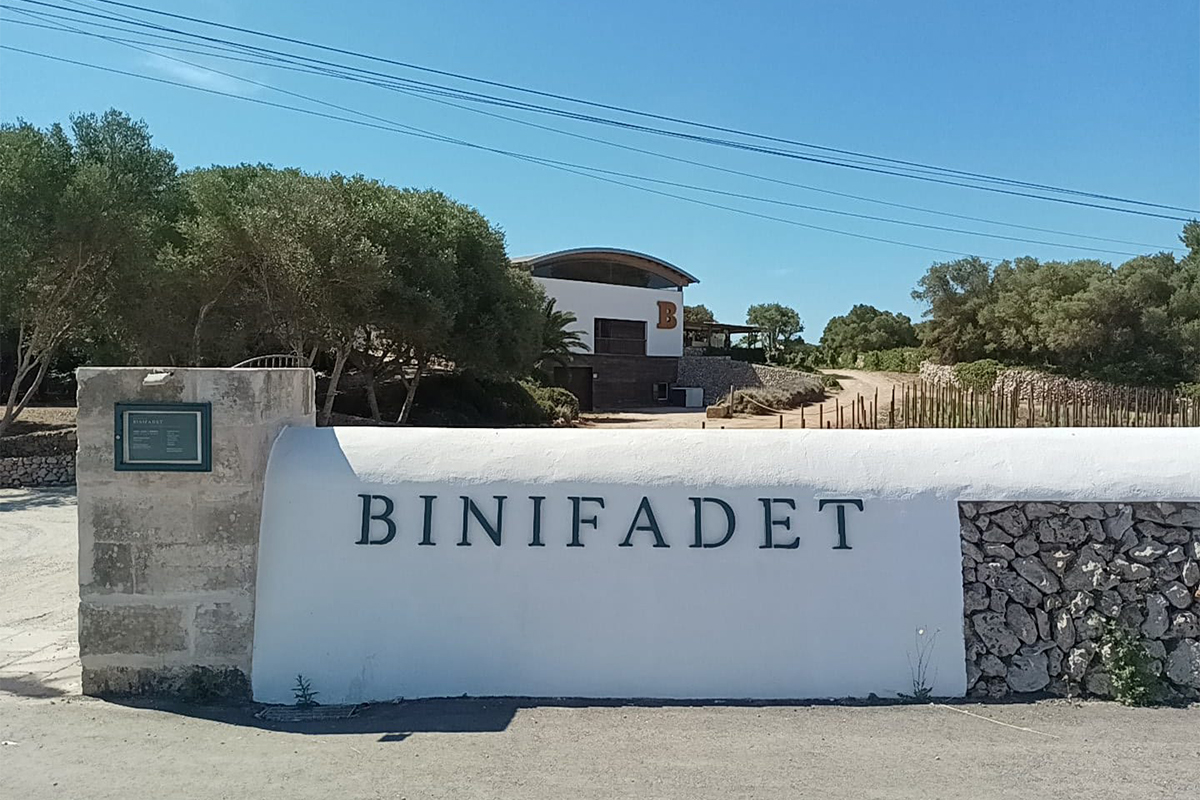
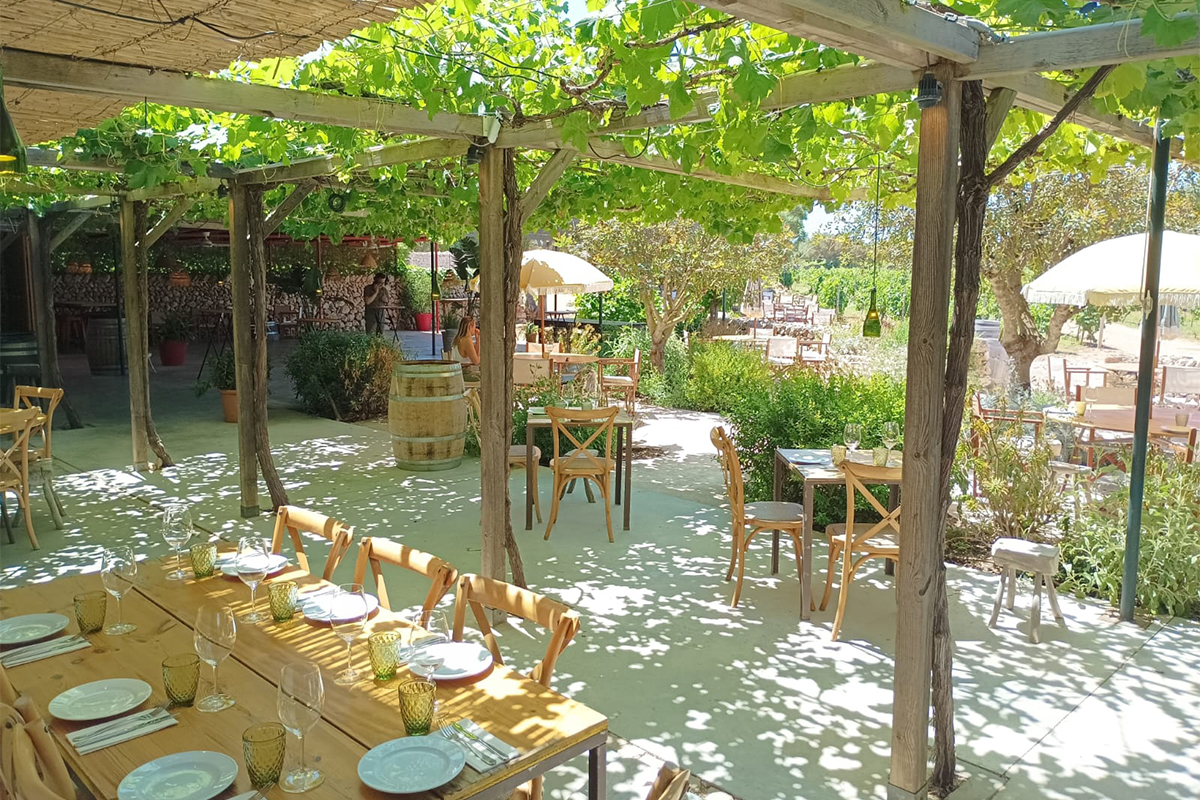
I was recently delighted to be invited to Bodegas Binifadet to be shown around the estate by son, Lluís Anglés, the current incumbent and, of course, to taste some of their wines. It was a bright warm, going to be hot, day with a clear blue sky outside when I walked into the impressive bodega building which cleverly manages to blend modern and antique styles, which include a lovely restaurant, tasting rooms and outdoor as well as indoor seating, plus, of course, a shop. It’s clear that wine tourism is also thriving here!
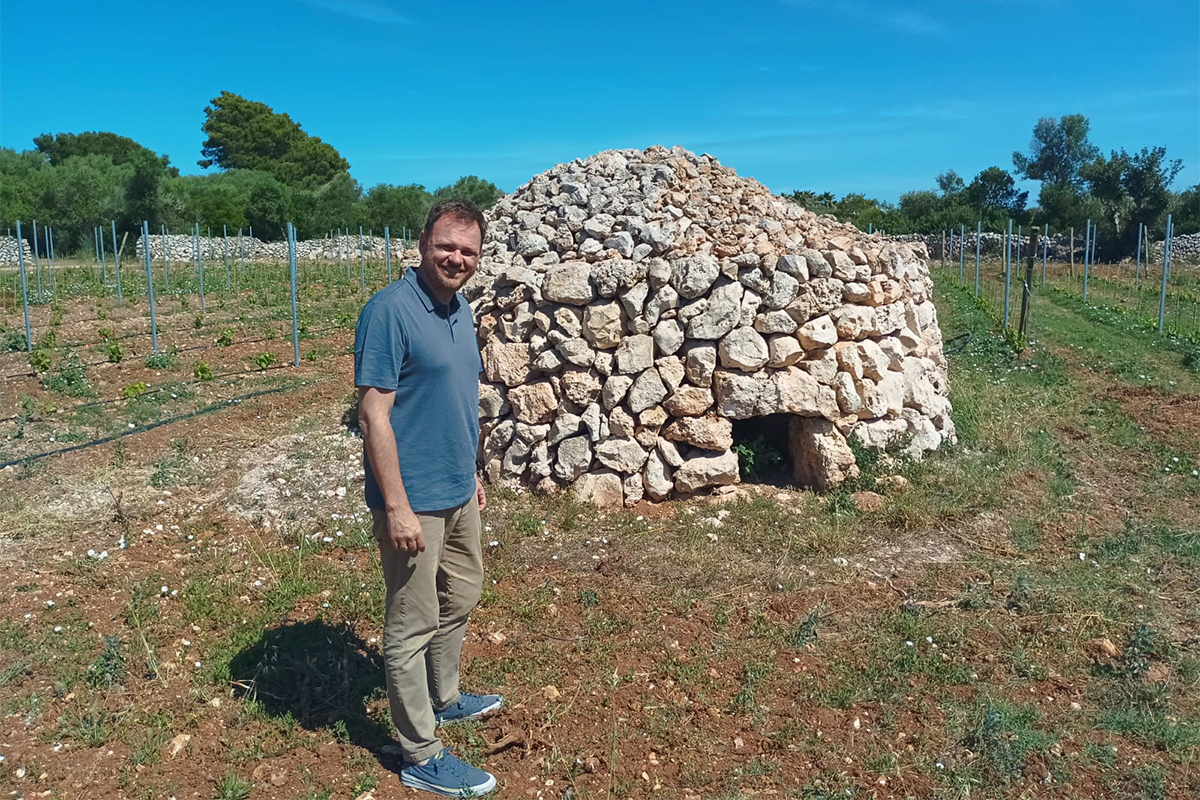
We firstly went outside to have a look at the ‘tancas’ – this is the local name for the small parcelas, or plots, that are home to the several different varieties grown at Bodegas Binifadet. If seen from the air, the vineyard, and indeed most of the island, looks a little like a giant, random chessboard. These tancas are formed by the dry-stone walling that is so prevalent throughout Menorca. It looks impressive, but aside from aesthetics, these walls serve a very practical purpose.
As with all the Balearic Islands, Menorca is subjected to winds that can vary from pleasant sea breezes to gale force, sustained gusts (I know how powerful – I ride a scooter!). The walls have been built for hundreds of years to protect whichever crops were being grown – their building is a great skill, much admired by locals and visitors alike.
However, though these winds can be damaging, they also bring some benefit. If there’s one thing that all the wines of the Balearics have in common, it’s a certain endearing and food-friendly salinity. And there’s a link here between what we find above ground and that which we can’t see, but we can taste in the wines – the stone on which the island’s metre deep, clay soil rests. The very stone used for the dry-stone walls.
Called locally, Marés, this rock was formed millions of years ago when the island didn’t yet exist, as it lay beneath the Mediterranean Sea. Billions of sea creatures, their shells, sand and limestone compacted and when the Tectonic plates moved, raising parts of the seabed to become islands, it was this stone that formed the bedrock of Menorca, contributing to the taste of the wines! As a fascinating aside, visitors can often see parts of crushed shells in the stone used for building throughout the island.
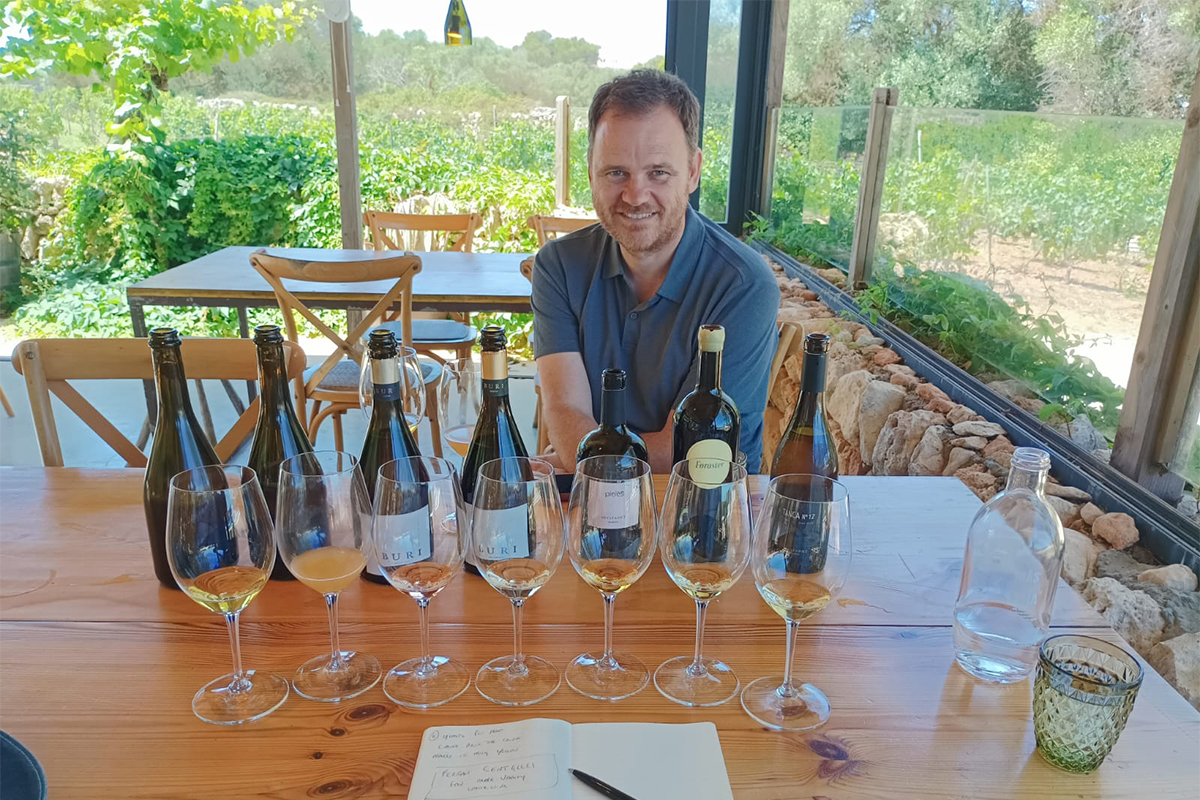
Lluís is a Chemical Engineer who grew up working the land and the vines with his visionary father and it was this experience that led him to leave the field of science to concentrate on the fields full of vines. He learnt his winemaking trade from his father who in turn, had learnt from local people and friends on the mainland who had experience of winemaking. Neither son nor father went to university or wine school their knowledge came from advice, trial and error and travel to other winemaking areas. The success of these formative years can be tasted in the wine and seen in the success of their wines in competition and in the various wine guides. Peñin, Spain’s most comprehensive and famous wine guide has given one of the Binifadet wines a very impressive 94 out of 100, the highest score, I believe, of any of the island’s wines!
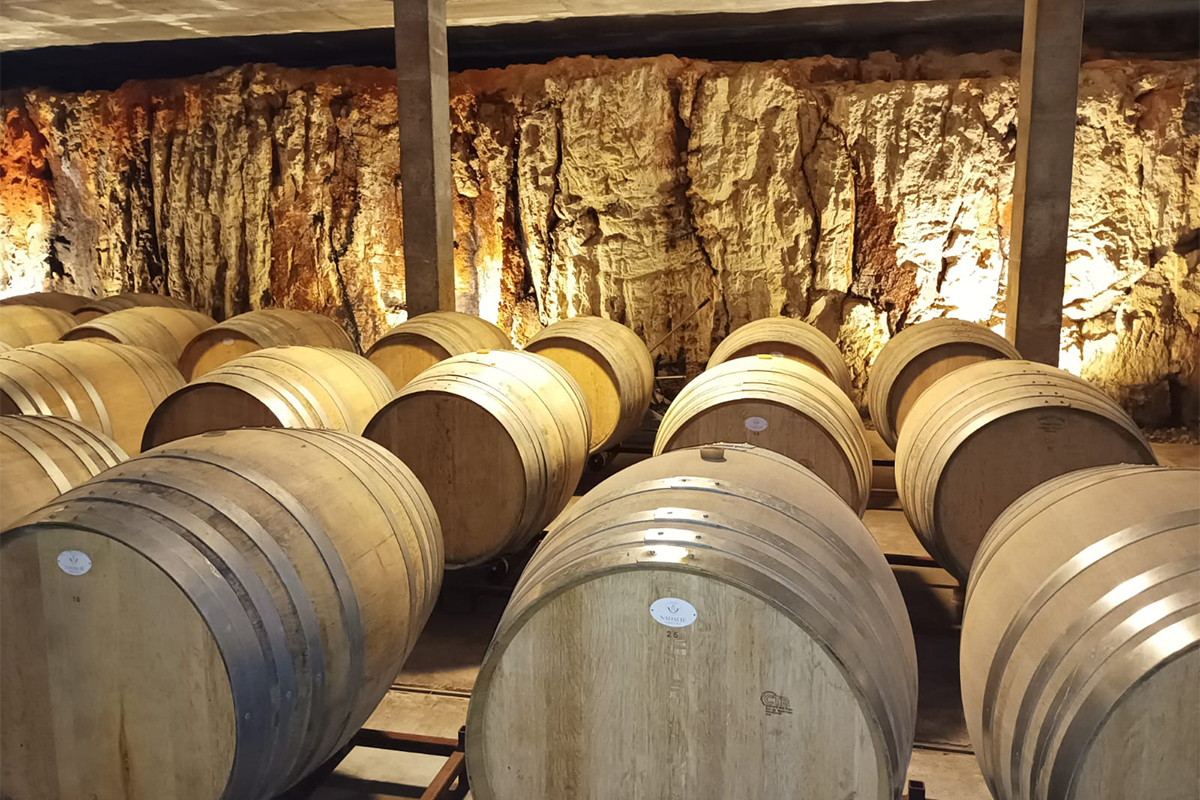
Bodegas Binifadet makes 14 different wines, equating to about 30% of the island’s total, approximate, 300,000 bottles. They work with mostly international varieties as well as some indigenous vines, one of which, Giró Ros, is a new one to me – more of this later. The rich terracotta coloured, clay soils allow the varieties to express themselves with aromatics and fruit notes throughout the portfolio and this, combining with the mineral salinity picked up from the Marés bedrock by the roots’ relatively short journey, are responsible for delightful wines!
Lluís maintains that his fruit forward, low tannin, mineral tinged, elegant wines are rather like Menorcan people themselves – a little shy at first, reticent at coming forward, sophisticated yet promising and delivering warmth and pleasure in abundance! I tasted seven – and I agree!
Buri Rosé Escumós (Espumoso) and its sister fizz, the Buri Blanc, are perfect examples of this elegance, though the rosé quickly delivers a wonderful, heady rose petal fragrance. Merlot is blended with the more local Monastrell as well as Chardonnay, lending its white wine colouring to the finished product. It’s had 14 months in bottle, developing some depth and texture. Fun, fresh and invigorating with a medium length finish – lovely.
The Blanc (white) is 100% Chardonnay but despite this variety’s reputation, when grown in some parts of the world, it demonstrates, initially at least, the shyness that Lluís mentions. However, when the palate warms the wine slightly it opens out and shows the taster what it’s got! Good fruit, depth, perhaps more mouthfeel than the rosado, with balanced acidity and that crucial vibrancy.
I was honoured to be asked to taste and comment on a new project – the experimental, just 50 bottles, Pet Nat wine, made by the ancestral method. Lluís loves his wine, but he also has a business head. He tells me that Pet Nat is easy to make – the fermenting wine is bottled whilst still fermenting. The metal cap, like that which we use for beer, is clamped on and the bubbles naturally resulting from fermentation have nowhere to escape, so are absorbed in the wine. This is very much quicker that using the traditional method, as with Buri wines, and it doesn’t need those 14 + months before it can be sold. The business head tells us that this is good for cash flow!
Well, I get it – but how is the wine? I’m not normally a big supporter of Pet Nat, Ancestral, Charmat Method wines – if I’m going to drink fizz, which I do, often, I want it to be a little (well, a lot) more substantial. In other words, as I told Lluís, I prefer Traditional Method sparkling wines – like Corpinnat, Cava, Champagne and indeed the Buri wines here at Binifadet.
However, I liked this Pet Nat for sure. The fizz is short lived – it’s meant to be; it’s light on the palate; it’s meant to be; and it has a short finish? Well, you know, it’s meant to be! However, it’s the flavour that I liked a lot and found really intriguing – and I found out why. This Pet Nat, which I’m pretty sure will be added to the Binifadet portfolio, has a glorious yellow/gold colour and a hard to define fruit and mineral flavour, understandably so because it’s unique.
It’s made with variety Giró Ros, a white wine grape that has a slightly pink rose-coloured skin. There are white stoned fruit notes, with papaya, a distant citrus and a little light undergrowth, with very faint blanched almonds. So unusual – and so likeable.
This Giró Ros (remember the name) is also 50% of the blend (with Garnacha Blanca) of the Foraster wine that I tasted, and loved, next. Its name is from the local dialect meaning, not permitted, foreign, resulting from the fact that, as yet anyway, Giró Ros is, curiously, not one of the permitted varieties here in IGP Illa de Menorca. (This is bound to change – remember these words!). It’s been fermented in oak with a very short time resting in barrel, it’s rounded, elegant yet very tasty and is selling like hot cakes!
On our tour of the vineyard the tancas, remember?), we stood for while in Tanca No. 12 – this is the vineyard that contains the Chardonnay which makes the eponymous Tanca No. 12 Chardonnay FB, whose 6 months in the oak barricas used for its fermentation add to the impressive aroma and flavour profiles. This is the wine that so impressed the Peñin judges and urged them to award it the 94 points mentioned earlier. What a wine! Somewhere between Burgundy elegance and depth and New World tropical fruit, siding mostly with France rather than California, it’s a standout wine. It will cost you 29€ from the winery, but it’s worth a lot more than that!
Finally, Pieles – you know me and my love of orange/amber wines, more accurately known as skin contact white wine – the deep, golden orange wine which is also made with Chardonnay, but leaving the skins and seeds in the clay amphora in which the wine ferments for two weeks. Ladies and Gentlemen – it’s classic ‘orange wine’. If, like me, you really like this style of wine, don’t hesitate, buy it and enjoy it with all manner of different cuisines.
Menorcan wines are not easy to find, their limited production also means their prices can be relatively high, but some things are worth seeking out and worth paying for. If you see Bodega Binifadet wines you really shouldn’t miss out!
Se advierte al usuario del uso de cookies propias y de terceros de personalización y de análisis al navegar por esta página web para mejorar nuestros servicios y recopilar información estrictamente estadística de la navegación en nuestro sitio web.

0 comentarios en